
CITB Specialist Highway Works Test
The CITB Specialist Highway Works test (HIW) is the HS&E paper for highway works: 50 questions in 45 minutes, core questions plus highway works questions, and 45 correct answers to pass.
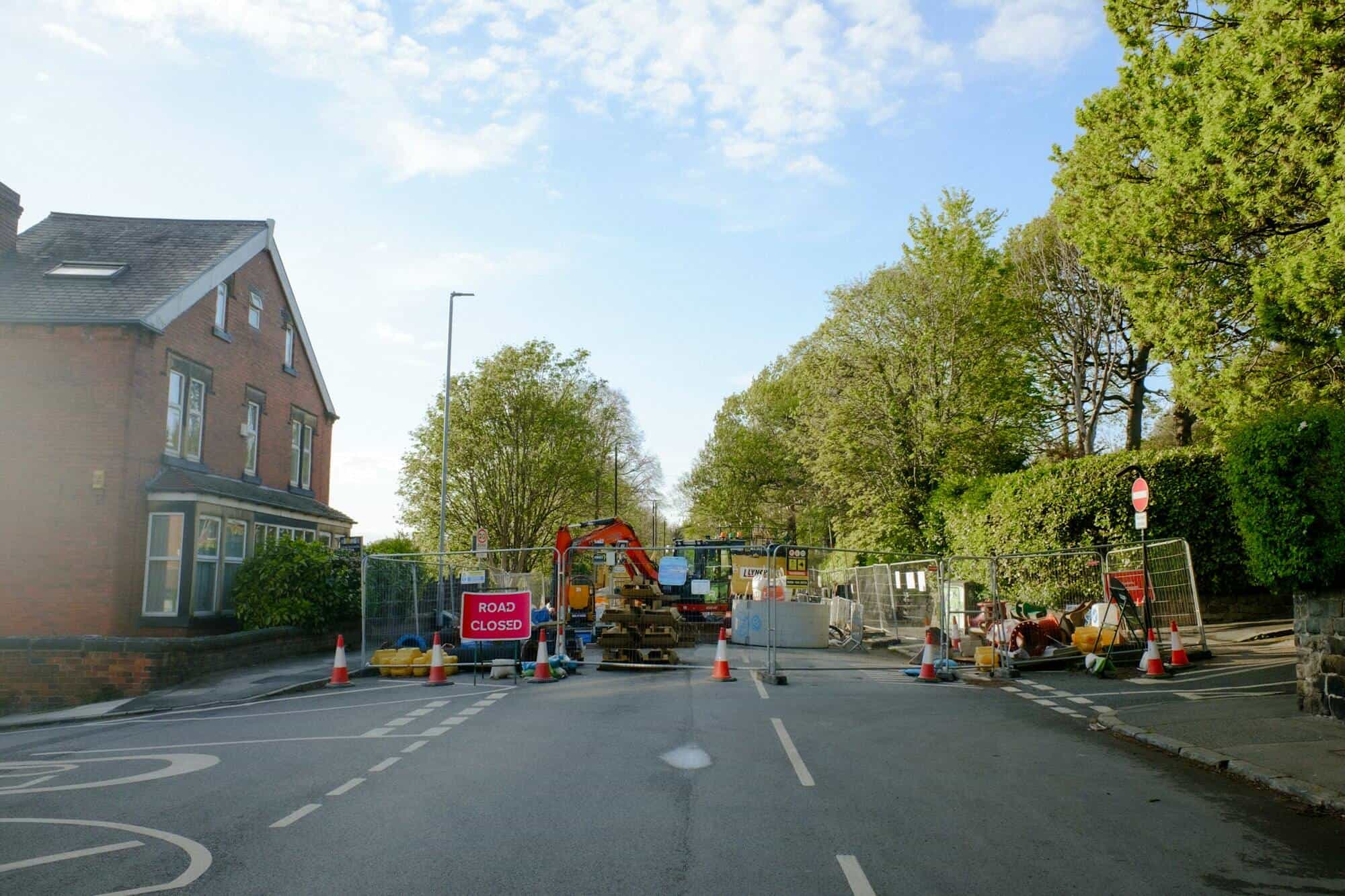
HIW is a CITB Specialist Test, and many people look for it as the street works test. Our highway works questions follow the Safety at Street Works and Road Works Code of Practice and Chapter 8 of the Traffic Signs Manual: signing, lighting and guarding works in the road, keeping people on foot safe, and controlling traffic past the site. Start the free HIW mock below and read the worked explanation after each answer. The test has voiceover in English or Welsh only (CITB, checked 31 October 2026). We do not book tests.
Start the Highway Works mock test
Start a 50-question, 45-minute Highway Works mock that mixes core questions with highway works questions, and see every answer explained. Our mock gives you 20 highway works questions and 30 core questions. That split is our design: the CITB pages we checked do not say how the CITB test divides its 50 questions. The mock is free: 3 mocks every 7 days without an account. A paid plan gives you unlimited mocks.
Free timed mock
CITB Specialist Highway Works Mock Test (timed)
- questions
- 50
- questions
- minutes
- 45
- minutes
- to pass (90%)
- 45
- to pass (90%)
Ready when you are
Find a quiet 45 minutes. The clock starts when you press start, and you see your score the moment you submit.
- Timed, exam conditions like the real CITB HS&E test. This mock shows you the answers at the end.
- A fresh set of questions every attempt: 20 on Highway works and 30 across CITB's five core knowledge areas.
- The clock keeps running if you leave the page, as it would in the test centre.
- Every answer comes with a worked explanation.
Who sits the Highway Works test?
The Highway Works test is the CITB HS&E Specialist paper for highway works; check the card finder CITB links to before you book. CITB's Specialist test page does not list the jobs that need each specialism. It points you to a card finder to check which HS&E test you need. If your main work is another trade, check whether one of the other 11 specialisms fits.
What do Highway Works questions cover?
Our highway works questions cover signing, lighting and guarding works in the street, safety zones and cone layouts, traffic control past the works, and the law behind them.
| Law or guidance | What the questions ask |
|---|---|
| Safety at Street Works and Road Works: A Code of Practice (2013) | The safety zone and sideways clearance, cone spacing, Stop/Go boards, short footway closures, and the order for putting out and taking in signs |
| Traffic Signs Manual Chapter 8, Part 2: road works and temporary situations, operations (2009) | Works vehicles, lighting at night, temporary footways, and checking a traffic management layout once it is in |
| The New Roads and Street Works Act 1991 | Guarding, lighting and signing with regard to the needs of people with a disability (section 65), and the qualified supervisor and trained operative needed when the street is broken up (section 67) |
| HSE CIS53, Reducing risk in temporary traffic management operations | When workers may cross a carriageway on foot, including the limit of four continuous lanes |
The table lists the sources our practice questions cite most.
How the questions are usually put
- Code questions ask what the Code of Practice says about a layout, a distance or a sign.
- Works vehicle scenarios ask where a vehicle goes, which way it faces, or what clearance it leaves.
- Timing questions ask when something must happen, such as a safety zone, an End of road works sign or high-visibility clothing.
The rest of the paper is core questions, so practise Buried Services Questions and Site Transport Questions too.
Highway Works sample questions with worked explanations
Here are 10 highway works practice questions, each with the answer and a worked explanation.
Sample question 1 · Highway works
What must never be used to weight down or secure road works signs and barriers?
- Sacks of granular material placed at low level on the sign feet
- Manufacturer-approved ballast clipped to the base of the frame
- Barrels, kerbstones, spoil, road pins or similar heavy objectsCorrect answer
- Purpose-made built-in weights supplied with the sign equipment
Why C: The Code warns against barrels, kerbstones, spoil, road pins or similar objects because they could create a danger for highway users if struck by a vehicle. Built-in weights, or sacks of granular material at low level, are what it recommends.
Sample question 2 · Highway works
A footway is temporarily obstructed at an attended site with no alternative route available. What must be provided for pedestrians?
- A written notice delivered to every property along the closed footway
- Enough operatives to advise, assist and direct people past the worksCorrect answer
- A printed diversion map fixed to the barrier at each end of the site
- A temporary pedestrian crossing worked from the works vehicle cab
Why B: Short delays on footways are permissible only if all the listed conditions apply, including sufficient operatives at all times to advise, assist and direct footway users safely past the works, closure for no more than 15 minutes in every full hour, and no wait longer than 5 minutes for help.
Sample question 3 · Highway works
Works are carried out in the space between parked vehicles. What does the Code allow?
- No advance signing or tapers if the works stay behind the parked lineCorrect answer
- No signing at all of any kind, including the site information board itself
- No safety zone, provided the parked cars remain there all day long
- No risk assessment, because the parked vehicles already form the protection
Why A: The Parked vehicles section allows works between parked vehicles to go without advance signing or lead-in and exit tapers, provided the whole works including the safety zone does not extend beyond the line of vehicles. All other signing and guarding is still required, and if the cars move the site must revert to the basic layout.
Sample question 4 · Highway works
When must an undertaker begin reinstating the street after street works?
- Within 10 working days of first breaking up the surface of the street itself
- Once the street authority has inspected and signed off the excavation
- At the end of the calendar month in which the works were completed
- As soon after completing any part of the works as is reasonably practicableCorrect answer
Why D: Section 70(2) requires reinstatement to begin as soon after the completion of any part of the street works as is reasonably practicable, and to be carried on and completed with all such dispatch as is reasonably practicable.
Sample question 5 · Highway works
Emergency works have to start on a street before a full layout can be set out. What does the Code require?
- A single Road works ahead sign is enough until the start of the next working day
- Full signing, lighting and guarding is needed only if the works will last over 60 minutes in all
- As much warning as practical, and full signing, lighting and guarding as quickly as possibleCorrect answer
- Signing can wait until the emergency is over, provided an operative stays with the works
Why C: The Code makes no exception for emergencies: road users must get as much warning as is reasonably practical and the full signing, lighting and guarding must follow as quickly as possible (Part 1, Planning).
Sample question 6 · Highway works
You see a pedestrian walk into the working space while an excavator is working. What should you do?
- Call the police and wait for an officer to remove them from the site
- Stop all machinery movements at once and escort them back to a safe routeCorrect answer
- Carry on working and shout to them to leave by the far side of the working site
- Finish the current lift, then ask them to step behind the nearest cone
Why B: The Code tells you to keep a lookout and, if pedestrians enter the working space, stop all machinery movements immediately and escort them back onto a safe route (Part 2, Protecting pedestrians during works).
Sample question 7 · Highway works
In which situation does the Code say Stop/Go boards must not be used?
- Where an uncontrolled junction joins the shuttle laneCorrect answer
- Where the coned area is shorter than 100 metres long
- On any road with a speed limit of 30 mph or less
- When the traffic includes buses or heavy goods vehicles
Why A: Stop/Go boards must not be used where there is an uncontrolled junction joining the shuttle lane, because traffic joining from it would not be held by either board (Part 2, Traffic control by Stop/Go boards).
Sample question 8 · Highway works
Which of these is an example of mobile works under the Code?
- Excavating a trench across the road for a new water connection
- Repairing a pothole from a vehicle parked for about 40 minutes
- Replacing a lamp column using a crane parked on the footway
- Grass cutting from a vehicle moving much slower than the trafficCorrect answer
Why D: Mobile works are carried out from a vehicle moving significantly more slowly than the prevailing traffic, with continuous operations such as grass cutting, hedge cutting and weed spraying (Part 2, Mobile works).
Sample question 9 · Highway works
A builder's skip is left on the carriageway overnight. How does Chapter 8 say it must be lit during darkness?
- It needs no lights if its end markings are reflective
- By street lighting alone, if within 50 m of a lamp
- With a warning light at each corner of the skipCorrect answer
- With one amber beacon placed on top of the load
Why C: During the hours of darkness a skip on the highway must be lit by warning lights at each corner, and any cones guarding it must also carry a warning light (para O3.29.4).
Sample question 10 · Highway works
Where does HSE guidance say a temporary traffic management layout should not start?
- At a fixed starting point used for frequent works there
- Close to a bend, slip road, junction or the brow of a hillCorrect answer
- On a straight, level section with clear sight lines both ways
- Where there is a wide verge for setting out the signs
Why B: CIS53 tells designers to start layouts in safe locations, avoiding hazardous positions such as close to a bend, slip road, junction or the brow of a hill.
Is highway works the same as street works?
Yes, for this test: CITB calls the paper Highway works (HIW), and most of our practice questions for it follow the Safety at Street Works and Road Works Code of Practice.
The Code covers works carried out by or for highway authorities and statutory undertakers, such as utility companies. It applies to all highways and roads except motorways and dual carriageways with a speed limit of 50 mph or more. For situations the Code does not cover, it points to Chapter 8 of the Traffic Signs Manual, which gives authoritative advice but does not have the status of a code of practice under the Act.
71 of our 110 highway works questions cite the Code.
Highway Works test FAQs
Which languages is the Highway Works test in?
English or Welsh voiceover only, like every Specialist test (CITB). The questions and answers on screen stay in English.
Does the Highway Works test cost more?
No. Every CITB HS&E test costs £23.50 (CITB, checked 31 October 2026).
Is there a street works mock test PDF?
No. Our Highway Works mock runs on this page, with a fresh set of questions each attempt and a worked explanation after each answer. For printed revision, CITB lists the GT100 book: sections A to E, plus the relevant chapter in section F.