
Site Transport Questions
CITB site transport questions test whether you know how people and vehicles are kept apart on site, and the right answer usually removes the hazard before relying on a signaller.
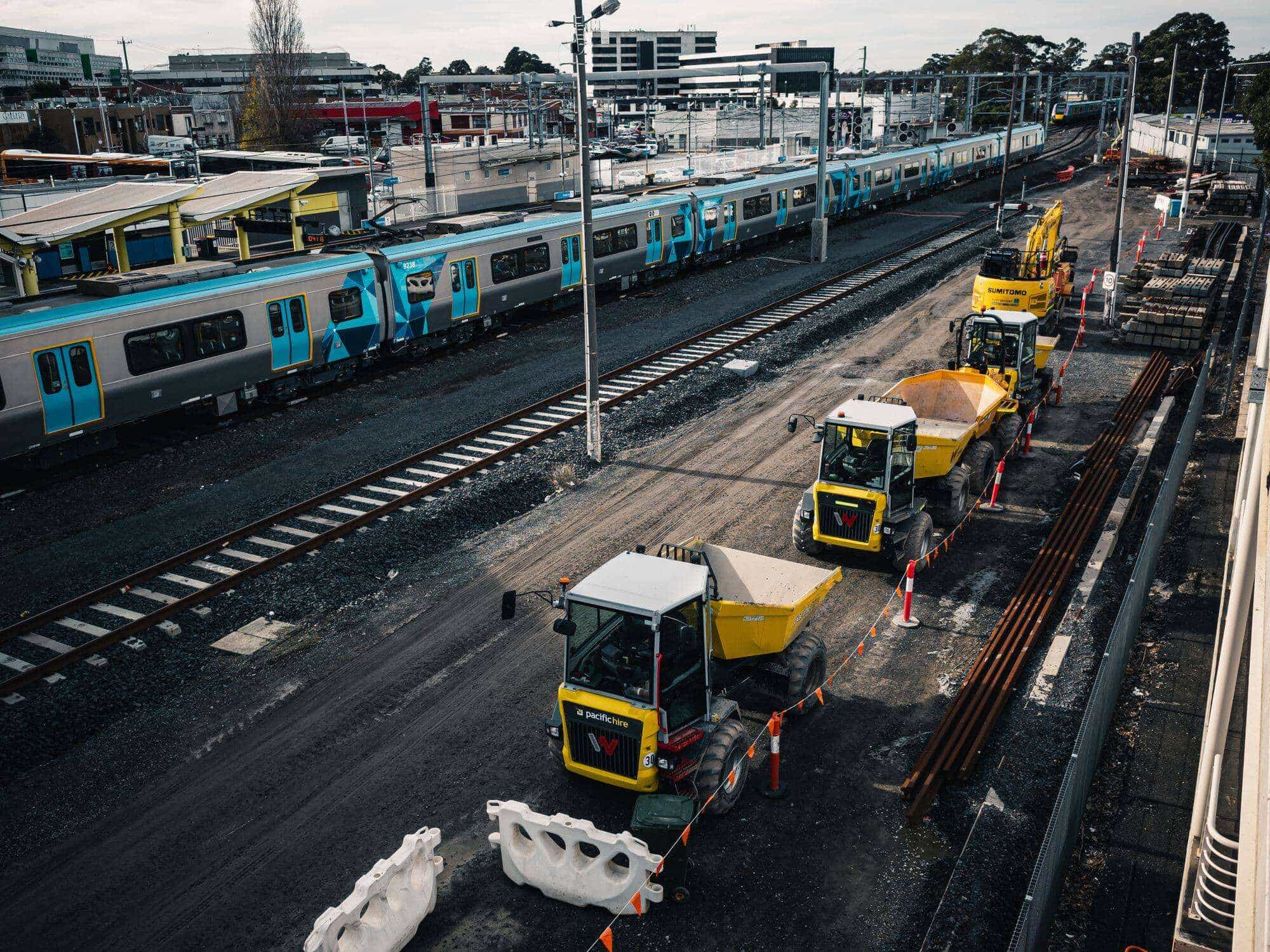
Most questions describe a lorry reversing, a dumper near an edge or people crossing a haul road, and ask what should happen first. Our questions are built on HSE's HSG144, The safe use of vehicles on construction sites, and HSG136, A guide to workplace transport safety, with the traffic route and vehicle rules in regulations 27 and 28 of the Construction (Design and Management) Regulations 2015. A common trap: carrying on when the signaller is out of sight. HSE says a driver who loses sight of the signaller should stop immediately. Take the timed quiz below, then read the 10 sample questions further down, each with a worked explanation. Practise site transport before your HS&E test for operatives or Specialist test.
Start the site transport quiz
The timed site transport quiz draws from our full site transport set and explains every answer. The quiz is free: 1 quiz every 7 days without an account, or 30 a day with a free account. A paid plan gives you unlimited quizzes.
Free practice quiz
Site Transport practice quiz (timed)
- questions
- 20
- questions
- minutes
- 30
- minutes
- to pass (90%)
- 18
- to pass (90%)
Ready when you are
Find a quiet 30 minutes. The clock starts when you press start, and you see your score the moment you submit.
- Answers and explanations are shown at the end, with every question to review.
- A fresh set of questions every attempt, drawn from our Site Transport set.
- About 90 seconds a question, against about 54 in the real test, so there is time to think.
- Every answer comes with a worked explanation.
How do CITB site transport questions usually ask it?
Site transport questions usually describe a reversing vehicle, a signaller or a walkway next to a vehicle route, then ask what should happen first or what keeps people safe.
| Question pattern | What it looks like, in our words | What the right answer usually does |
|---|---|---|
| Reversing | A vehicle has to reverse into a tight space, and you choose the best way to control the risk | Removes the need to reverse first, with one-way systems, turning areas and drive-through loading. HSG144 says warning systems give the lowest level of protection |
| Signallers | A signaller guides a driver, and you choose where the signaller stands or what happens when they lose sight of each other | Stops the vehicle. HSG144 says a signaller must stay visible to the driver, stand in a safe place and not stand directly behind a reversing vehicle |
| People and vehicles | A walkway is blocked, or people on foot need to cross a vehicle route, and you choose what keeps them safe | Keeps people and vehicles apart. CDM 2015 requires sufficient separation and, where that is not reasonably practicable, other protection plus a warning when a vehicle approaches |
Which law and guidance are site transport questions based on?
Our site transport questions are built mainly on HSE's HSG144, The safe use of vehicles on construction sites, with HSG136 for workplace transport in general and the Construction (Design and Management) Regulations 2015 for the legal duties on traffic routes and vehicles.
| Law or guidance | What the questions take from it |
|---|---|
| HSE HSG144, The safe use of vehicles on construction sites (second edition, 2009) | Planning the site layout, separating people from vehicles, the order of controls for reversing, signallers, and dumpers and other site plant |
| HSE HSG136, A guide to workplace transport safety (third edition, 2014) | One-way systems, parking, loading and unloading, and falls from vehicles |
| Construction (Design and Management) Regulations 2015, regulations 27 and 28 | Traffic routes that are suitable, signed, checked and kept clear (regulation 27), and vehicles: preventing unintended movement, giving warnings, riding only in a safe place, and stopping vehicles falling into excavations or water (regulation 28) |
| HSE L117, Rider-operated lift trucks: operator training and safe use (third edition, 2013) | The three stages of lift truck operator training: basic, specific job and familiarisation |
| Provision and Use of Work Equipment Regulations 1998, regulation 26 | Reducing the risk to a rider when mobile plant rolls over, by stabilising it or fitting a protective structure, plus a restraining system where the rider could be crushed |
Regulations 27 and 28 sit in Part 4 of CDM 2015, General requirements for all construction sites, and CDM Regulations Questions covers who holds which duty on a project.
Site transport sample questions with worked explanations
Here are 10 site transport practice questions, each with the answer and a worked explanation.
Sample question 1 · Site Transport & Traffic Management
As well as being signed where necessary, what must happen to every site traffic route?
- It must be closed to traffic during hours of darkness
- It must be shown on a plan sent to the local council office
- It must be regularly checked and properly maintainedCorrect answer
- It must be repainted in reflective paint once a month
Why C: Regulation 27(4) of CDM 2015 says each traffic route must be indicated by suitable signs where necessary, and must be regularly checked and properly maintained. Sites change week by week, so a route that was safe at the start of the job can end up rutted, flooded or blocked.
Sample question 2 · Site Transport & Traffic Management
PUWER 1998 says the risk to a rider from mobile plant rolling over must be minimised. How?
- By checking the tyres and the brakes at the end of each week
- By stabilising it, or by fitting a protective structure or deviceCorrect answer
- By fitting a governor that holds the machine down to a walking pace
- By keeping a second machine nearby to right it after a roll
Why B: Regulation 26(1) of PUWER 1998 requires the rollover risk to be minimised by stabilising the equipment, by a structure that stops it going past its side, by a structure giving enough clearance if it goes further, or by a device giving comparable protection.
Sample question 3 · Site Transport & Traffic Management
A driver being guided backwards loses sight of the signaller. What should the driver do?
- Stop the vehicle immediatelyCorrect answer
- Carry on at a slower speed
- Carry on and finish the manoeuvre quickly
- Sound the horn and keep going
Why A: HSE guidance is that if drivers lose sight of the signaller they should know to stop immediately. Losing sight of the signaller may be because the signaller has moved into the vehicle's path, so continuing is exactly the wrong response.
Sample question 4 · Site Transport & Traffic Management
What does HSE guidance say should be provided where dumpers tip near an excavation or pit?
- A written permit for each load that is tipped there
- A hard hat and gloves for everyone in the tipping area
- A second dumper waiting in case the first one gets stuck
- Wheel stops set a safe distance back from the edgeCorrect answer
Why D: HSE construction guidance says to provide wheel stops at a safe distance from the edges of excavations and pits to prevent site dumpers falling in. The stop has to be set back far enough that the ground under the wheels does not collapse first.
Sample question 5 · Site Transport & Traffic Management
According to HSE, what causes the majority of construction transport accidents?
- Poor weather making the site roads wet and slippery
- Visiting drivers not recognising UK road signs
- Inadequate segregation of pedestrians and vehiclesCorrect answer
- Mechanical faults in the brakes of older site plant
Why C: HSE HSG144 paragraph 5 says most construction transport accidents result from inadequate segregation of pedestrians and vehicles, which careful planning can usually avoid.
Sample question 6 · Site Transport & Traffic Management
What does HSE guidance say about road signs used to guide drivers in a private workplace?
- Signs are not needed if drivers have been given a verbal briefing
- They must be the same as those used on public roads where one existsCorrect answer
- Each site should design its own signs to suit its own particular layout
- Only handwritten signs are allowed so they can be changed each day
Why B: HSE HSG136 paragraph 69 says road signs in private workplaces must be the same as those used on public roads wherever a suitable sign exists.
Sample question 7 · Site Transport & Traffic Management
A plant operator holds a valid training certificate for an excavator. What else does HSE guidance say to check?
- That they have enough experience on that class of machineCorrect answer
- Nothing, as the certificate shows they are fully competent
- That they also hold a full licence to drive a car on roads
- That they trained with the same firm that owns the machine
Why A: HSE HSG144 paragraph 49 says training alone is not competence: the operator needs enough experience on the class of machine and time to get familiar with a new one.
Sample question 8 · Site Transport & Traffic Management
According to HSE guidance, when should a rear-tipping lorry not tip its load?
- When a competent signaller is supervising it
- When the load is spread evenly in the body
- When it is parked on firm and level ground
- During high winds or while standing on a slopeCorrect answer
Why D: HSE HSG144 paragraph 62 says rear-tipping lorries can overturn, so they should always tip on firm level ground and never on a slope or in high winds.
Sample question 9 · Site Transport & Traffic Management
What does HSE guidance say about using a lorry's sheeting hooks to secure a load?
- They can be used for any load lighter than one tonne
- They should be used together with the curtain buckles
- Avoid it, as they are only meant to hold a weather sheetCorrect answer
- They are the strongest anchor points fitted to most lorries
Why C: HSE HSG136 paragraph 141 says avoid using sheeting hooks to secure loads, as they are designed only to hold a tarpaulin for weather protection.
Sample question 10 · Site Transport & Traffic Management
Apart from in ports, what is the minimum age HSE's lift truck ACOP gives for selecting lift-truck operators?
- Any age, once they have passed a course
- Over the minimum school-leaving age of 16Correct answer
- At least 21, and holding a full car licence
- At least 25 for any type of lift truck
Why B: HSE L117 paragraph 49 says operators should be over the minimum school-leaving age (16), or at least 18 in ports unless in supervised training; under-16s should never operate lift trucks.
Which site transport answers catch people out?
The traps are answers that keep the vehicle moving when nobody can see: carrying on without the signaller, trusting an alarm instead of avoiding the reverse, and reversing blind when no signaller is there.
Stop at once if you lose sight of the signaller. HSE's guidance on reversing says drivers who lose sight of the signaller should know to stop immediately. HSG144 gives the signaller the same rule: if the driver and the signaller cannot see each other, stop the vehicle moving.
Avoiding the reverse comes before any reversing aid. HSE says to remove the need for reversing altogether, for example with one-way systems and drive-through loading and unloading. HSG144 says warning systems give the lowest level of protection and, if they are the only precaution, suit only low-risk situations.
With no signaller and no view behind, get out and look. HSE says drivers who cannot see behind the vehicle should leave the cab and check behind it before reversing.
Where does site transport sit in the CITB test?
Site transport is part of the core knowledge you practise for the CITB Operatives test. The Specialist tests include the core questions too, so the same knowledge counts there.
Site transport FAQs
What should a driver do if they lose sight of the signaller?
Stop immediately. HSE's guidance on reversing says drivers who lose sight of the signaller should know to stop at once, and HSG144 tells signallers to stop the vehicle if they and the driver cannot see each other.
Are these the real CITB test questions?
No. These are practice questions written for this site, each tied to the law or HSE guidance it tests; CITB does not publish its test questions.