
CDM Regulations Questions
CITB CDM Regulations questions test whether you know who holds which duty on a construction project, and the right answer usually names the duty holder the regulation names.
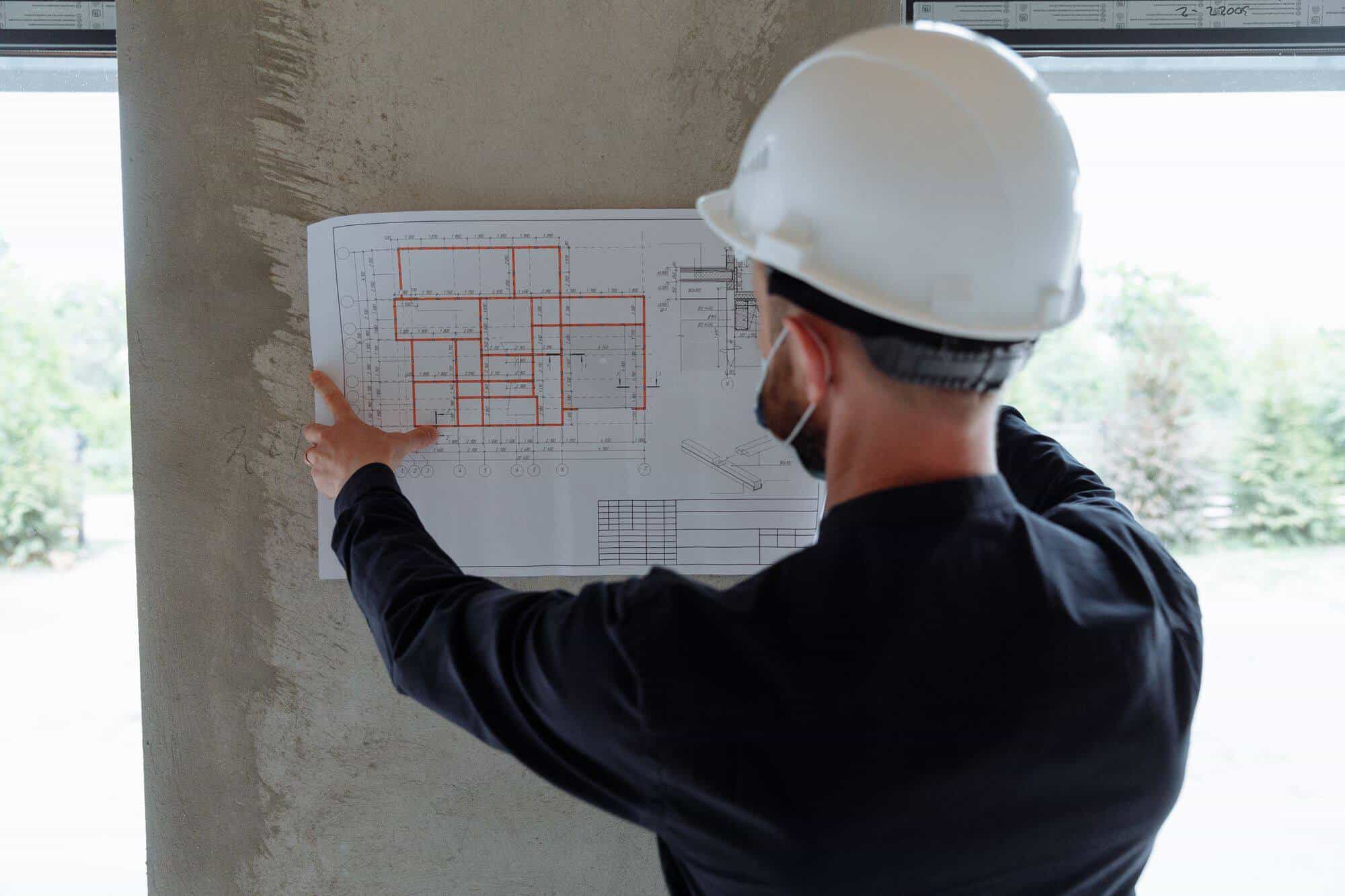
Nearly half of our CDM questions start "Under CDM 2015" and ask who must do something: the client, the principal designer, the principal contractor, a designer or a contractor. Others ask about the construction phase plan, the health and safety file or which projects must be notified. Our questions are built on the Construction (Design and Management) Regulations 2015 and HSE's guidance on them, known as L153. A common trap: whether a project needs a principal contractor depends on how many contractors work on it, whatever its size or cost. Take the timed quiz below, then read the 10 sample questions further down, each with a worked explanation. Practise CDM before your CITB Operatives Test or Specialist test, and check yourself with a CITB Operatives mock test.
Start the CDM Regulations quiz
The timed CDM Regulations quiz draws from our full CDM set and explains every answer. The quiz is free: 1 quiz every 7 days without an account, or 30 a day with a free account. A paid plan gives you unlimited quizzes.
Free practice quiz
CDM Regulations practice quiz (timed)
- questions
- 20
- questions
- minutes
- 30
- minutes
- to pass (90%)
- 18
- to pass (90%)
Ready when you are
Find a quiet 30 minutes. The clock starts when you press start, and you see your score the moment you submit.
- Answers and explanations are shown at the end, with every question to review.
- A fresh set of questions every attempt, drawn from our CDM Regulations set.
- About 90 seconds a question, against about 54 in the real test, so there is time to think.
- Every answer comes with a worked explanation.
How do CITB CDM Regulations questions usually ask it?
CDM questions usually name a duty holder, a document or a type of project, then ask who must act, what they must do or by when.
| Question pattern | What it looks like, in our words | What the right answer usually does |
|---|---|---|
| Who holds the duty | A duty is described, such as appointing a principal contractor or giving a site induction, and you choose who must do it | Names the person the regulation names. The client appoints the principal designer and principal contractor, the principal contractor makes sure a suitable site induction is provided, and every contractor plans, manages and monitors their own work |
| Plans and files | You are asked who draws up the construction phase plan or prepares the health and safety file, and when | Matches each document to its owner. The principal contractor draws up the construction phase plan before the site is set up, or the contractor if there is only one, and the principal designer prepares the health and safety file during the pre-construction phase |
| Notification and domestic clients | A project's length and workforce are given, or the client is a homeowner, and you decide what must happen | Applies regulation 6: a project is notifiable if it is scheduled to last longer than 30 working days with more than 20 workers working at the same time at any point, or to exceed 500 person days. For a domestic client, the client duties pass to someone else |
Which law and guidance are CDM Regulations questions based on?
Our CDM questions are built mainly on the Construction (Design and Management) Regulations 2015, with HSE's L153 guidance for how each duty holder meets them.
| Law or guidance | What the questions take from it |
|---|---|
| Construction (Design and Management) Regulations 2015 | Who counts as client, designer and contractor (regulation 2), client duties and notification (regulations 4 to 7), cooperating and reporting dangers (regulation 8), designers (regulation 9), the principal designer (regulations 11 and 12), the principal contractor (regulations 12 and 13), contractors (regulation 15) and minimum welfare facilities (Schedule 2) |
| HSE L153, Managing health and safety in construction (2015) | How each duty holder meets the Regulations, what goes in the construction phase plan and the health and safety file, what a site induction should cover, supervision, and working for a domestic client |
| HSE, Domestic clients: roles and responsibilities | Who takes on the client duties when the work is on someone's own home |
Regulation 4 says a client's arrangements are suitable only if the welfare facilities in Schedule 2 are provided, and Health and Welfare Questions covers the toilets, washing, drinking water, changing rooms and rest areas that schedule lists.
CDM Regulations sample questions with worked explanations
Here are 10 CDM Regulations practice questions, each with the answer and a worked explanation.
Sample question 1 · CDM Regulations
Under CDM 2015, what must a client do about managing a project?
- Carry out the risk assessments for the tasks on the site
- Supervise the contractor's operatives throughout the works
- Make suitable arrangements, allowing enough time and resourcesCorrect answer
- Appoint a safety adviser to run the whole site on the client's behalf
Why C: Regulation 4(1) requires a client to make suitable arrangements for managing a project, including the allocation of sufficient time and other resources. Squeezing the programme or the budget is itself a breach, because rushed work is unsafe work.
Sample question 2 · CDM Regulations
Under CDM 2015, what must happen to the notice for a notifiable project?
- It is sealed in the health and safety file until the very end
- It is displayed in the site office where workers can read itCorrect answer
- It is lodged with the local authority before the work starts
- It is posted to workers' home addresses before they start
Why B: Regulation 6(3)(b) requires the notice to be clearly displayed in the construction site office in a comprehensible form where it can be read by any worker engaged in the construction work, and updated periodically if necessary.
Sample question 3 · CDM Regulations
Under CDM 2015, what must a designer provide along with the design itself?
- Enough information to help others comply with their dutiesCorrect answer
- A signed certificate confirming that the design is fully safe
- A priced bill of quantities for the full construction work
- A copy of the designer's professional indemnity insurance certificate
Why A: Regulation 9(4) requires the designer to take all reasonable steps to provide, with the design, sufficient information about the design, construction or maintenance of the structure to help the client, other designers and contractors meet their duties.
Sample question 4 · CDM Regulations
Under CDM 2015, who receives the health and safety file at the end of the project?
- The Executive, which stores it for the life of the building
- The principal designer, who retains it permanently on file
- The local authority, which keeps it with the approval papers
- The client, who needs it for any later work on the structureCorrect answer
Why D: Regulation 12(10) requires the principal designer, or the principal contractor where there is no principal designer, to pass the health and safety file to the client at the end of the project. The client then keeps it available for anyone who needs it.
Sample question 5 · CDM Regulations
A housing association has a leaking roof repaired on one of the houses it rents out. What kind of client is it under CDM 2015?
- Not a client, because repair work on rented housing is outside CDM
- A domestic client for small repairs, becoming commercial for large works
- A commercial client, as owning homes does not make it a domestic oneCorrect answer
- A domestic client, because the building being repaired is somebody's home
Why C: HSE L153 paragraph 53 says housing associations, landlords and other businesses that own homes are not domestic clients, so the full client duties apply to them.
Sample question 6 · CDM Regulations
Can a construction phase plan be kept as an electronic file instead of on paper?
- No, electronic plans are accepted only for notifiable projects
- Yes, if it can be retrieved when required and is secure from lossCorrect answer
- No, CDM 2015 requires every plan to be kept as a signed paper copy
- Yes, but only once the paper original has been sent to the HSE
Why B: Regulation 2(2) says any reference to a plan, rule or document includes an electronic version, provided it can be retrieved or reproduced when required and is secure from loss or unauthorised interference.
Sample question 7 · CDM Regulations
Which topics does HSE guidance suggest the site rules in the construction phase plan should cover?
- PPE, parking, radios and mobile phones, smoking and hot worksCorrect answer
- Tender prices, payment terms and the dates for invoicing the work
- Design calculations and the specification of the structural steel
- Planning conditions and the finished building's energy rating
Why A: HSE L153 Appendix 3 paragraph 13 says site rules should cover topics such as PPE, parking, radios and mobile phones, smoking, restricted areas, hot works and emergency arrangements.
Sample question 8 · CDM Regulations
What does HSE guidance say about relying on an industry certification card as evidence of a worker's competence?
- A valid card is full proof that no further checks are needed
- A card is proof enough if it was issued in the last twelve months
- Cards should be ignored completely when appointing workers
- Sole reliance should not be placed on the card as evidenceCorrect answer
Why D: HSE L153 paragraph 163 says sole reliance should not be placed on industry certification cards; contractors should also check skills, knowledge, training and experience under regulation 15(7).
Sample question 9 · CDM Regulations
When do a designer's duties under CDM 2015 start to apply?
- Only when the client has secured the money to pay for the work
- When the principal contractor is appointed and the site set up
- As soon as designs for use in construction work are startedCorrect answer
- Only once planning permission for the project has been granted
Why C: HSE L153 paragraph 77 says designer duties apply as soon as designs that may be used in construction work are started, whether or not planning permission or funds are secured.
Sample question 10 · CDM Regulations
Which part of CDM 2015 applies only to work on construction sites, rather than to the whole project?
- Part 1, which defines the terms used across the Regulations
- Part 4, the general requirements for all construction sitesCorrect answer
- Part 2, which sets out the duties of clients on the project
- Part 3, which sets out the duties of designers and contractors
Why B: HSE L153 paragraph 22 says that apart from Part 4, the Regulations apply to the project as a whole; Part 4 relates only to work on construction sites (regulation 16(1)).
Which CDM Regulations answers catch people out?
The traps are answers that judge a project by its size, hand the notification to the wrong person, or forget the different rules for a domestic client.
The trigger for a principal designer and a principal contractor is the number of contractors. The client must appoint both in writing where there is more than one contractor, or it is reasonably foreseeable there will be. The appointments must be made as soon as practicable, and in any event before the construction phase begins. The project's value, length and the client's experience play no part in that test.
On a commercial project the client notifies a notifiable project. The client gives notice in writing to the Health and Safety Executive as soon as practicable before the construction phase begins. The notice must then be clearly displayed in the site office, where any worker on the job can read it.
A domestic client is someone having work done that is not part of their business, such as work on their own home. Their client duties pass to the contractor if there is only one, to the principal contractor if there are more, or to a principal designer who has agreed in writing to take them on.
Where does CDM sit in the CITB test?
The CDM Regulations are part of the core knowledge you practise for the CITB Operatives test. The Specialist tests include the core questions too, so the same knowledge counts there.
CDM Regulations FAQs
When does a client need a principal contractor?
When more than one contractor works on the project, or it is reasonably foreseeable that more than one will. The client must appoint the principal contractor and a principal designer in writing, before the construction phase begins.
Are these the real CITB test questions?
No. These are practice questions written for this site, each tied to the law or HSE guidance it tests; CITB does not publish its test questions.