
PPE Questions
CITB PPE questions test whether you know who provides PPE, when to wear it and why it comes last, and the right answer usually treats PPE as the last resort.
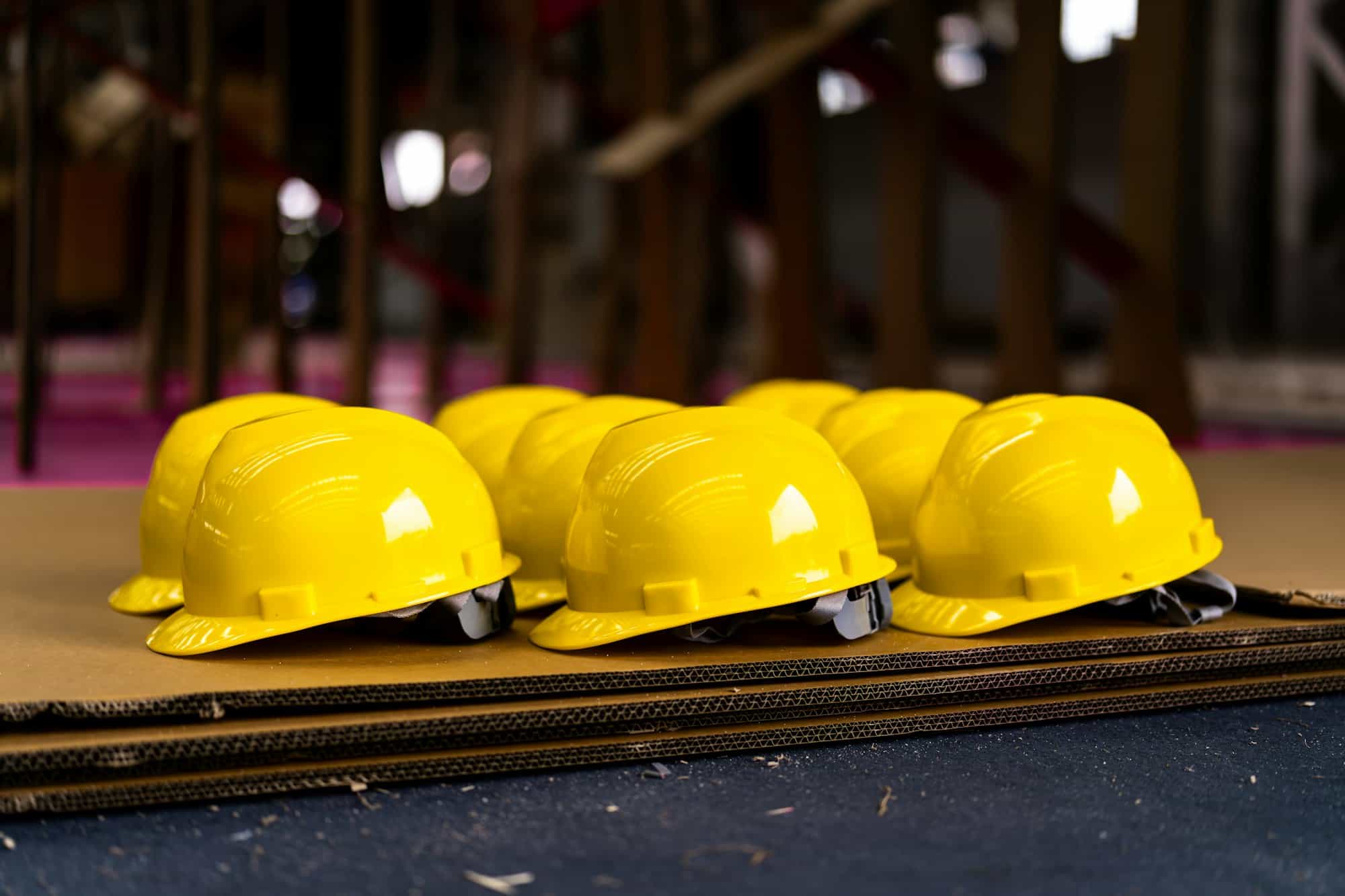
Many questions name a regulation and ask what it requires, such as what makes PPE suitable or what a worker must do when kit is lost or damaged. Others set a scene on site, like ear defenders that will not fit with a hard hat. Our questions are built on the Personal Protective Equipment at Work Regulations 1992 and HSE's guidance on them, known as L25. A common trap: choosing PPE first when the hazard could be removed or controlled at source. Take the timed quiz below, then read the 10 sample questions further down, each with a worked explanation. Practise PPE before your CITB Operatives Test or Specialist test, and check yourself with a free Operatives mock test.
Start the PPE quiz
The timed PPE quiz draws from our full PPE set and explains every answer. The quiz is free: 1 quiz every 7 days without an account, or 30 a day with a free account. A paid plan gives you unlimited quizzes.
Free practice quiz
PPE practice quiz (timed)
- questions
- 20
- questions
- minutes
- 30
- minutes
- to pass (90%)
- 18
- to pass (90%)
Ready when you are
Find a quiet 30 minutes. The clock starts when you press start, and you see your score the moment you submit.
- Answers and explanations are shown at the end, with every question to review.
- A fresh set of questions every attempt, drawn from our PPE set.
- About 90 seconds a question, against about 54 in the real test, so there is time to think.
- Every answer comes with a worked explanation.
How do CITB PPE questions usually ask it?
PPE questions usually quote a duty from the PPE Regulations or describe a worker and their kit, then ask who must act or what happens next.
| Question pattern | What it looks like, in our words | What the right answer usually does |
|---|---|---|
| What a regulation requires | A duty is named, such as providing PPE, assessing it or training people to use it, and you pick what it covers | Follows the wording of the duty. Regulation 4 says PPE is suitable only if it is right for the risk, the conditions and how long it is worn, and fits the wearer, after adjustment if needed |
| A worker and their kit | Ear defenders that will not sit with a hard hat, gloves that spoil grip, or safety glasses lost on site | Keeps every item working against its risk. Items worn together must be compatible and still effective, and a worker must report lost or obviously faulty PPE to their employer straight away |
| Who provides and who pays | A worker is asked to pay for boots, hi-vis or a hard hat, or to bring their own | Puts the duty on the employer. L25 says employers cannot charge workers for PPE, for storing, maintaining or replacing it, or for training in its use |
Which law and guidance are PPE questions based on?
Our PPE questions are built mainly on the Personal Protective Equipment at Work Regulations 1992 and HSE's L25 guidance on them, with HSE's construction answers for hard hats, boots and hi-vis.
| Law or guidance | What the questions take from it |
|---|---|
| Personal Protective Equipment at Work Regulations 1992, as amended in 2022 | Providing suitable PPE (regulation 4), compatibility (regulation 5), the assessment (regulation 6), maintenance and replacement (regulation 7), information, instruction and training (regulation 9), proper use (regulation 10) and reporting loss or defects (regulation 11). Since 6 April 2022 the duties cover limb (b) workers as well as employees |
| HSE L25, Personal protective equipment at work (fourth edition, 2022) | Why PPE is the last resort, the order of controls, no charging for PPE, sharing and cleaning kit, and allowing for individual needs such as a latex allergy |
| HSE, Construction FAQs on personal protective equipment | When head protection is required on site, the exemption for turban-wearing Sikhs, safety footwear and where hi-vis is worn |
| Health and Safety at Work etc. Act 1974, section 9 | The rule that an employer must not charge employees for anything done or provided to meet a specific legal requirement |
L25 says the PPE Regulations do not apply to hearing protectors and most respiratory protective equipment, because other regulations cover them, and Respiratory Hazards Questions covers dust, fumes and the masks used against them.
PPE sample questions with worked explanations
Here are 10 PPE practice questions, each with the answer and a worked explanation.
Sample question 1 · PPE (Personal Protective Equipment)
Ear defenders break the seal of a hard hat when worn together. What is the correct response?
- Wear only the hard hat, since head injury is the more serious of the risks
- Wear only the defenders, since noise damage is permanent and cumulative
- Find a compatible combination that stays effective against both risksCorrect answer
- Wear both anyway and accept that both items will be slightly less effective
Why C: Regulation 5 does not allow one risk to be traded against another. The duty is to provide a combination that continues to work against both, for example helmet-mounted defenders.
Sample question 2 · PPE (Personal Protective Equipment)
Since April 2022, who is covered by the PPE Regulations?
- Only directly employed employees with a contract of employment
- Workers, a wider group than employees, following a 2022 amendmentCorrect answer
- Only those workers who have been on the site for more than one month
- Only employees and agency staff, but never the genuinely self-employed
Why B: The Personal Protective Equipment at Work (Amendment) Regulations 2022 replaced employees with workers throughout, in force 6 April 2022, extending the duties to limb (b) workers.
Sample question 3 · PPE (Personal Protective Equipment)
What happens to the PPE duty where a policing activity conflicts with it?
- The duty falls away entirely for police officers on any operation
- The duty applies so far as is reasonably practicable in that situationCorrect answer
- The duty is transferred to the individual officer rather than the force
- The duty is unaffected, since no exception exists in the Regulations
Why B: Regulation 4(1A) provides that where compliance would lead to an inevitable conflict with the exercise of police powers or duties, the requirement applies so far as is reasonably practicable.
Sample question 4 · PPE (Personal Protective Equipment)
Which type of eye protection protects the eyes from all angles because its whole rim is in contact with the face?
- Safety spectacles with side shields built into the frame
- A faceshield held on by an adjustable head harness
- A visor mounted on the front of an industrial helmet
- Goggles with a flexible frame and an elastic headbandCorrect answer
Why D: L25 says goggles give the eyes protection from all angles because the complete rim is in contact with the face. Faceshields protect the face but do not fully enclose the eyes.
Sample question 5 · PPE (Personal Protective Equipment)
Under the PPE at Work Regulations, can clothing that protects you against the weather count as PPE?
- Only if it has high-visibility strips sewn onto it as well
- Yes. The definition includes clothing protecting against the weatherCorrect answer
- No. Weather clothing is the worker's own job to provide for themselves
- No. Only equipment protecting against impact or chemicals counts
Why B: Regulation 2(1) defines PPE as all equipment, including clothing affording protection against the weather, intended to be worn or held at work to protect against a risk.
Sample question 6 · PPE (Personal Protective Equipment)
Which duties does HSE say a limb (b) worker has under the PPE at Work Regulations?
- Carry out their own PPE assessment before starting the job
- Sign off the employer's PPE assessment before work starts
- Use the PPE as trained and return it to the storage providedCorrect answer
- Buy their own PPE and keep the receipts to show the employer
Why C: HSE's guidance on the 2022 amendment says a limb (b) worker must use PPE in line with their training and instruction and return it to the storage area the employer provides.
Sample question 7 · PPE (Personal Protective Equipment)
When does L25 say PPE should generally be examined to make sure it is in good working order?
- Only after an accident involving it
- Before it is issued to the userCorrect answer
- Only once it is reported lost
- Once a year by the manufacturer
Why B: L25 says PPE should generally be examined by trained staff before it is issued, and it should not be issued if found to be defective.
Sample question 8 · PPE (Personal Protective Equipment)
What does L25 suggest as a useful way to monitor how well PPE is being used?
- Spot checks, with corrective action if misuse is foundCorrect answer
- A form for workers to fill in at the end of each year
- Waiting for accident reports to reveal any problems
- Checking the stock levels in the PPE store each month
Why A: L25 says supervision is vital and spot checks are a useful way to monitor PPE use, so corrective action can be taken if misuse is revealed.
Sample question 9 · PPE (Personal Protective Equipment)
Your safety glasses are so deeply scratched that you cannot see clearly through them. What should happen?
- Keep using them until the job you are on is finished
- Polish out the scratches with an abrasive cleaning cloth
- Push them up on your head so you can see underneath
- Stop using them, throw them away and get a replacementCorrect answer
Why D: L25 says do not use eye protection when visibility is noticeably reduced, for example by deeply scratched lenses. Throw it away and replace it.
Sample question 10 · PPE (Personal Protective Equipment)
Why do some contractors ban rigger boots on their sites?
- They are too hot to wear for a full working day
- They cannot be worn with high-visibility trousers
- Wearers are more likely to twist or sprain an ankleCorrect answer
- Rigger boots do not have protective toecaps fitted
Why C: HSE says some companies found rigger boot wearers much more likely to suffer twisted or sprained ankles because of the looser fit, and accepts this as a reason for a site ban.
Which PPE answers catch people out?
The traps are answers that reach for PPE too early, trade one risk for another, or leave the worker paying for their own kit.
PPE comes after other controls. L25 calls it the last resort and says engineering controls and safe systems of work should be considered first. One reason it gives is that PPE only protects the person wearing it, while controlling the risk at source can protect everyone in the workplace. If an option removes or guards the hazard, it usually comes before gloves or goggles.
Two items worn together must both still work. Regulation 5 says that where more than one risk means a worker must wear more than one item of PPE at the same time, the items must be compatible and stay effective against each risk. Wearing only the hard hat, or only the ear defenders, does not meet that duty.
Your employer cannot charge you for PPE it must provide. Section 9 of the 1974 Act bars charging employees for anything provided to meet a specific legal requirement, and L25 says this extends to workers and covers storage, maintenance, replacement and training. HSE's construction answers add that you do not pay for basic safety boots or hi-vis, as long as you look after them and make them last a reasonable time.
Where does PPE sit in the CITB test?
PPE is part of the core knowledge you practise for the CITB Operatives test. The Specialist tests include the core questions too, so the same knowledge counts there.
PPE FAQs
Can your employer charge you for PPE?
No. If the law requires your employer to provide PPE, it must not charge you for it. HSE's guidance says this also covers storing, maintaining and replacing the PPE and training you to use it.
Are these the real CITB test questions?
No. These are practice questions written for this site, each tied to the law or HSE guidance it tests; CITB does not publish its test questions.