
CITB Specialist Working at Height Test
The CITB Specialist Working at Height test (WAH) is the HS&E paper for specialist work at height: 50 questions in 45 minutes, core questions plus work at height questions, and 45 correct answers to pass.
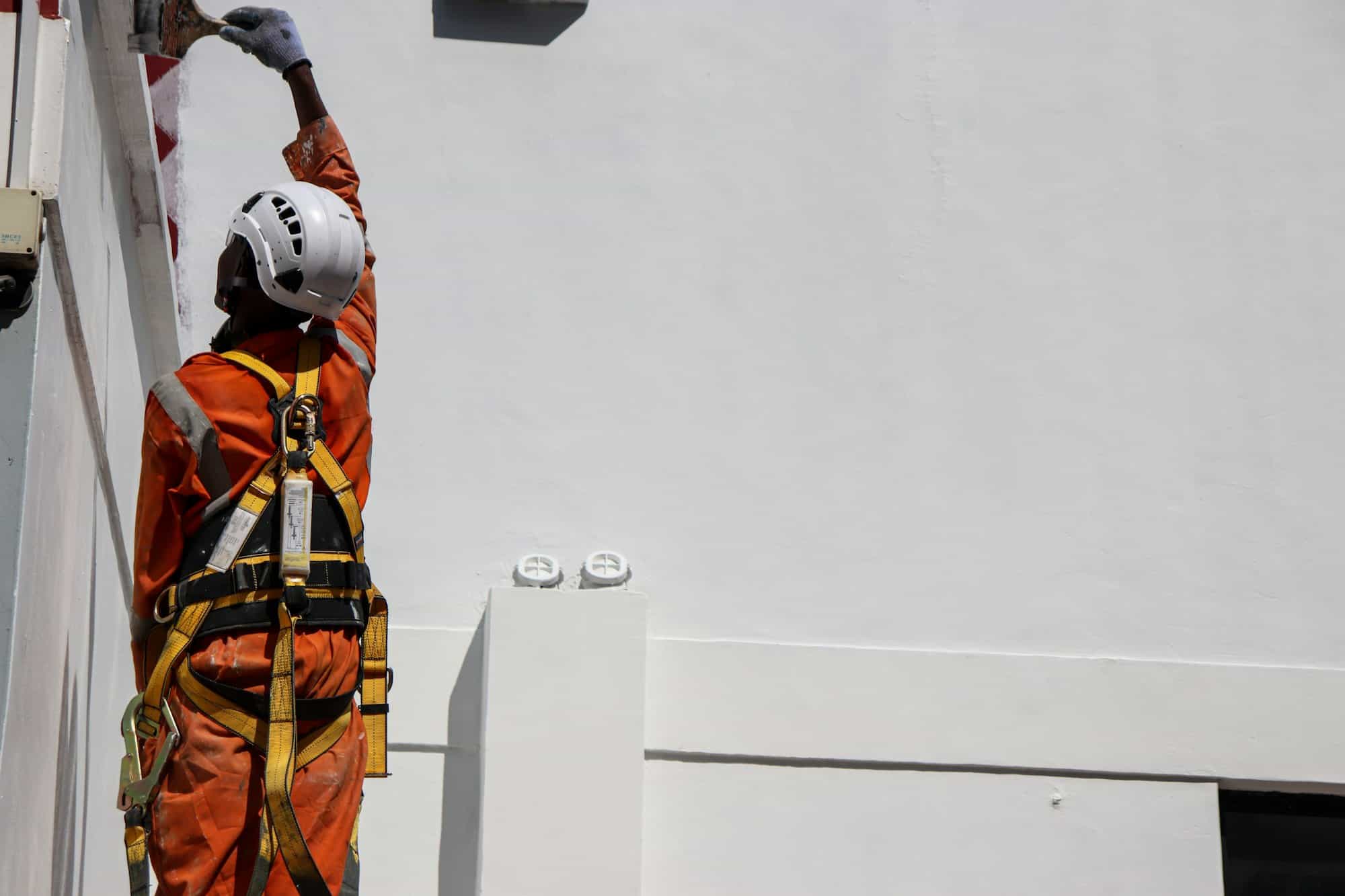
CITB lists it as "specialist work at height (WAH)", one of all 12 CITB specialisms. It is a whole paper, mixing core questions with work at height questions, so it goes further than the single working at height topic in our core practice questions. Our work at height questions are built mainly on the Work at Height Regulations 2005 and HSE's roof work guide, HSG33: planning and rescue, which precaution comes first, fragile surfaces, falling objects and inspecting access equipment. Start the free WAH mock below and read the worked explanation after each answer. The test has voiceover in English or Welsh only (CITB, checked 31 October 2026). We do not book tests.
Start the Working at Height mock test
Start a 50-question, 45-minute Working at Height mock that mixes core questions with work at height questions, and see every answer explained. Our mock gives you 20 work at height questions and 30 core questions. That split is our design: the CITB pages we checked do not say how the CITB test divides its 50 questions. The mock is free: 3 mocks every 7 days without an account. A paid plan gives you unlimited mocks.
Free timed mock
CITB Specialist Work at Height Mock Test (timed)
- questions
- 50
- questions
- minutes
- 45
- minutes
- to pass (90%)
- 45
- to pass (90%)
Ready when you are
Find a quiet 45 minutes. The clock starts when you press start, and you see your score the moment you submit.
- Timed, exam conditions like the real CITB HS&E test. This mock shows you the answers at the end.
- A fresh set of questions every attempt: 20 on Work at height and 30 across CITB's five core knowledge areas.
- The clock keeps running if you leave the page, as it would in the test centre.
- Every answer comes with a worked explanation.
Who sits the Working at Height test?
The Working at Height test is the CITB HS&E Specialist paper for specialist work at height; check the card finder CITB links to before you book. CITB's Specialist test page does not list the jobs that need each specialism. It points you to a card finder to check which HS&E test you need. If your main work is another trade, check whether one of the other 11 specialisms fits.
What do Working at Height questions cover?
Our work at height questions cover the duties in the Work at Height Regulations 2005 and the HSE guidance on roofs, scaffolds and ladders that sits behind them.
| Law or guidance | What the questions ask |
|---|---|
| The Work at Height Regulations 2005 | What "work at height" and "working platform" mean (regulation 2), planning that includes emergencies and rescue (regulation 4), using an existing safe place of work before fall prevention equipment (regulation 6), fragile surfaces (regulation 9), falling objects (regulation 10) and inspecting equipment in the position it is used (regulation 12) |
| HSE HSG33, Health and safety in roof work (fifth edition, 2020) | Planning roof work, and falls through fragile materials such as rooflights and asbestos cement sheets |
| HSE guidance on scaffolds | Who may put up and alter a scaffold, when a scaffold needs its own design, and duty ratings |
| HSE INDG401, Working at height: a brief guide (2014) | What employers must do to stop falls, and the common causes: ladders and fragile roofs |
| HSE guidance on ladders and stepladders | Types of ladder, the 1 in 4 angle, and the checks before you climb |
The table lists the sources our practice questions cite most.
How the questions are usually put
- Definition questions name a regulation and ask what a word in it covers, for example whether a place below ground can count as work at height.
- Order questions ask which precaution comes first, such as an existing safe place of work before a harness or a net.
- Scenario questions put a worker on a ladder, a tower or a roof and ask what the Regulations or HSE guidance expect next.
The rest of the paper is core questions from CITB's five core knowledge areas: working environment, occupational health, safety, high risk activities and specialist.
Working at Height sample questions with worked explanations
Here are 10 work at height practice questions, each with the answer and a worked explanation.
Sample question 1 · Specialist work at height
What does regulation 6(5) require where the risk of a fall is not eliminated?
- That the work is abandoned until the risk can be removed completely
- That workers with under five years experience are kept off the work
- That a supervisor watches the work continuously from ground level
- Equipment to minimise the distance and the consequences of a fallCorrect answer
Why D: Regulation 6(5)(a) requires sufficient work equipment to minimise the distance and consequences of a fall, or where the distance cannot be minimised, the consequences.
Sample question 2 · Specialist work at height
Can waste be thrown down from a scaffold into a skip below?
- Yes, provided the area beneath the scaffold has been fenced off
- Yes, provided a person at ground level watches for pedestrians
- No, unless the drop is less than two metres to the skip below
- No, not where throwing or tipping is liable to cause injuryCorrect answer
Why D: Regulation 10(3) prohibits material or objects being thrown or tipped from height in circumstances where it is liable to cause injury to any person.
Sample question 3 · Specialist work at height
Does the exclusion for a staircase apply on a construction site?
- Yes, all staircases anywhere on the site are excluded from the definition
- No, the exclusion is limited to a staircase in a permanent workplaceCorrect answer
- Yes, provided the staircase has a handrail fitted on both sides
- No, staircases are never excluded under any circumstances at all
Why B: The wording is except by a staircase in a permanent workplace. A temporary stair tower on a construction site does not attract the exclusion.
Sample question 4 · Specialist work at height
A stepladder is used for a short task. Do the Regulations apply?
- No, stepladders are outside the scope of these Regulations entirely
- No, provided the task takes less than thirty minutes to complete
- Yes. Ladder includes a stepladder, and the hierarchy still appliesCorrect answer
- Yes, but the inspection duties apply and the hierarchy does not
Why C: The definition of ladder includes a stepladder, and regulation 6 applies regardless of duration. Short duration affects equipment selection, not whether the law applies.
Sample question 5 · Specialist work at height
Under Schedule 6, the surface a ladder rests on must support it so that what stays true?
- Its feet sink slightly for extra grip
- Its base sits at least 1 m from walls
- Its stiles lean in towards one another
- Its rungs or steps remain horizontalCorrect answer
Why D: Schedule 6 paragraph 2 requires the surface to be stable, firm, strong enough and of suitable composition to support the ladder so that its rungs or steps remain horizontal, plus any intended load.
Sample question 6 · Specialist work at height
A worker needs to drill side-on into brickwork from a stepladder and the side loading cannot be avoided. What does HSE advise?
- Stop the steps tipping, for example by tying them, or use other equipmentCorrect answer
- Lean into the drill with the hip against the stepladder for more grip
- Stand higher up the steps so that the drill is pushed in at a downward angle
- Drill with the steps closed and rested flat against the brick wall
Why A: HSE says avoid side loading such as side-on drilling into solid materials, and where it cannot be avoided, prevent the steps tipping, for example by tying them, or use more suitable access equipment.
Sample question 7 · Specialist work at height
An employee has been trained to use equipment for work at height but believes following that method would be unsafe in this case. What does HSE say they should do?
- Seek further instructions before carrying onCorrect answer
- Carry on, because training must be followed
- Switch to the method they think is quickest
- Finish the task and report it afterwards
Why A: INDG401 says employees must use the equipment as trained and instructed, unless they think that would be unsafe, in which case they should seek further instructions before continuing.
Sample question 8 · Specialist work at height
How far below the working level does HSE say safety nets should be rigged?
- As close as possible, and not more than 2 m below where practicableCorrect answer
- At least 6 m below, so the net has room to stretch when it is hit
- At ground level, so that the net can be checked without a ladder
- Exactly 3 m below, which is the standard height for a safety net
Why A: HSG33 says nets should always be rigged as close as possible to the working level and, where reasonably practicable, not more than 2 m below it.
Sample question 9 · Specialist work at height
Short-duration work on a sloping roof has been assessed as low risk. What does HSE give as a minimum safe means of working on the roof?
- A properly constructed and supported roof ladderCorrect answer
- A length of rope tied around the chimney stack
- A pair of soft-soled boots with a good grip
- A colleague watching from the scaffold below
Why A: HSG33 says the minimum for short-duration work is a safe means of access to roof level and a safe means of working on the roof, such as a properly constructed and supported roof ladder on a sloping roof.
Sample question 10 · Specialist work at height
A scaffold inspector finds a defect and has it put right straight away. What does HSE say the inspection report should show?
- The defect and the corrective action, even though it was fixed promptlyCorrect answer
- Nothing about it, because only defects left unfixed go on the report
- Only the inspector's name and the date, as the defect was dealt with
- A note to say the scaffold failed and must be inspected again in a week
Why A: HSE says the inspection report must note any defects or matters that could give rise to a risk and any corrective actions taken, even when taken promptly, to help identify recurring problems.
How is the Specialist WAH test different from working at height questions?
The WAH test is a whole CITB Specialist paper, while working at height questions are one topic among our core practice questions.
| Specialist WAH test | Working at height questions | |
|---|---|---|
| What it is | One of CITB's 12 Specialist tests, booked and sat as your HS&E test | One topic in our practice question pool, not a CITB test |
| What is tested | Core questions plus work at height questions, 50 in all | Work at height questions only |
| Where to practise | The WAH mock on this page | Working at Height Questions |
Both use the same question bank on this site: our WAH mock takes its 20 specialism questions from our working at height questions. If you sit a different paper, practise the topic on its own instead. Check the card finder CITB links to if you are not sure WAH is your paper.
Working at Height test FAQs
Which languages is the Working at Height test in?
English or Welsh voiceover only, like every Specialist test (CITB). The questions and answers on screen stay in English.
Does the Working at Height test cost more?
No. Every CITB HS&E test costs £23.50 (CITB, checked 31 October 2026).
Is the WAH test the same as a working at height course?
No. The WAH test is a 50-question HS&E test, while a course is training. For Specialist tests, CITB's revision page says to contact your specialist trade association or industry body for guidance on which course to take.