
CITB Specialist Plumbing (JIB) Test
The CITB Specialist Plumbing (JIB) test (PLUM) is the HS&E paper for plumbing work: 50 questions in 45 minutes, core questions plus plumbing questions, and 45 correct answers to pass.
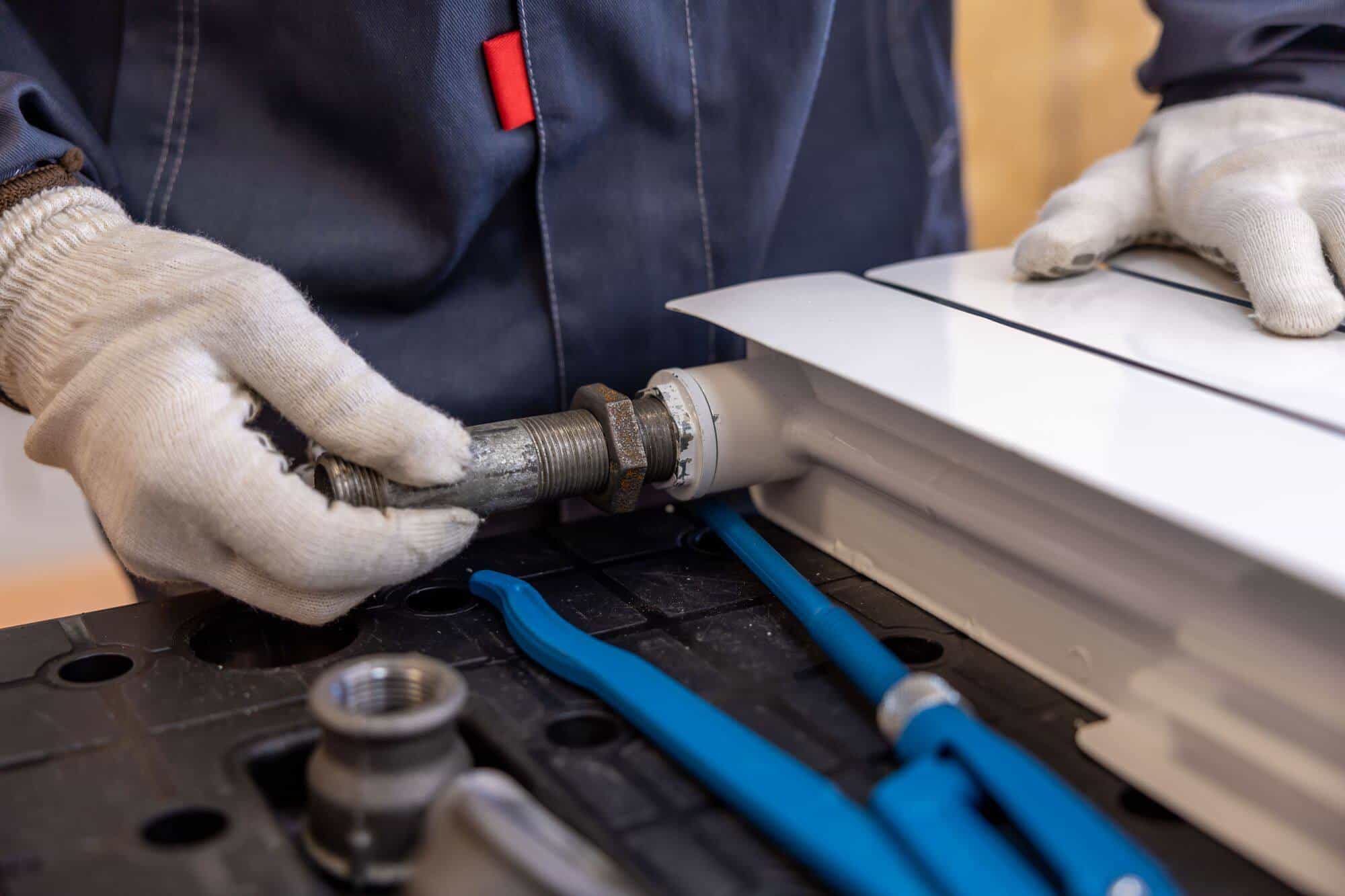
It is one of the CITB Specialist Tests, and CITB lists it as plumbing (JIB), code PLUM. Our plumbing questions are about the rules an installer works to on the job. They are built mainly on the Water Supply (Water Fittings) Regulations 1999 and the Gas Safety (Installation and Use) Regulations 1998, with HSE's legionella guidance for hot and cold water. Start the free PLUM mock below and read the worked explanation after each answer. The test has voiceover in English or Welsh only (CITB, checked 31 October 2026). We do not book tests.
Start the Plumbing (JIB) mock test
Start a 50-question, 45-minute Plumbing (JIB) mock that mixes core questions with plumbing questions, and see every answer explained. Our mock gives you 20 plumbing questions and 30 core questions. That split is our design: the CITB pages we checked do not say how the CITB test divides its 50 questions. The mock is free: 3 mocks every 7 days without an account. A paid plan gives you unlimited mocks.
Free timed mock
CITB Specialist Plumbing (JIB) Mock Test (timed)
- questions
- 50
- questions
- minutes
- 45
- minutes
- to pass (90%)
- 45
- to pass (90%)
Ready when you are
Find a quiet 45 minutes. The clock starts when you press start, and you see your score the moment you submit.
- Timed, exam conditions like the real CITB HS&E test. This mock shows you the answers at the end.
- A fresh set of questions every attempt: 20 on Plumbing (JIB) and 30 across CITB's five core knowledge areas.
- The clock keeps running if you leave the page, as it would in the test centre.
- Every answer comes with a worked explanation.
Who sits the Plumbing (JIB) test?
The Plumbing (JIB) test is the CITB HS&E Specialist paper for plumbing work; check the card finder CITB links to before you book. CITB's Specialist test page does not list the jobs that need each specialism. It points you to a card finder to check which HS&E test you need. If your main work is another trade, check whether one of the other 11 specialisms fits.
What do Plumbing (JIB) questions cover?
Our plumbing questions cover water fittings, gas safety, legionella control in hot and cold water, and the Building Regulations for hot water and drainage.
| Law or guidance | What the questions ask |
|---|---|
| The Water Supply (Water Fittings) Regulations 1999 | Fluid categories (Schedule 1), backflow prevention, and the valves an unvented hot water vessel needs (Schedule 2) |
| The Gas Safety (Installation and Use) Regulations 1998 | Running and testing gas pipework, keeping electrical continuity with a bond when you cut a gas pipe (regulation 10), and the rules on flues and flue dampers |
| HSE HSG274 Part 2, The control of legionella bacteria in hot and cold water systems, and HSE's legionella web guidance | Hot water storage temperatures, flushing new and little-used outlets, dead legs and standby pumps |
| The Building Regulations 2010, Schedule 1 Parts G and H | The 48°C limit on hot water to a bath in a new home, safety devices on stored hot water, and where foul drainage goes |
The table lists the sources our practice questions cite most.
How the questions are usually put
- Installer scenarios start with the job in hand, such as cutting into a gas pipe or finishing a new system, and ask what the rules require next.
- Rule questions name a part of a schedule or regulation and ask what it says.
- New-installation questions ask what a new hot water or sanitation system must have, or what must happen before it is used.
The rest of the paper is core questions, so practise COSHH Questions and Fire Safety Questions too.
Plumbing (JIB) sample questions with worked explanations
Here are 10 plumbing practice questions, each with the answer and a worked explanation.
Sample question 1 · Plumbing (JIB)
According to HSE, which water temperature range suits the growth of legionella bacteria?
- 0 to 10 degrees C
- 20 to 45 degrees CCorrect answer
- 50 to 70 degrees C
- 70 to 90 degrees C
Why B: HSE says the risk from legionella increases where the water temperature in all or some parts of the system is between 20 and 45 degrees C, which is suitable for growth. Keeping water outside that band is the basis of temperature control in hot and cold water systems.
Sample question 2 · Plumbing (JIB)
You are about to cut a metal gas pipe to fit a new section. Where it is necessary to prevent danger, what does regulation 10 of the Gas Safety (Installation and Use) Regulations 1998 require?
- A residual current device fitted to the site supply before you cut the pipe
- The main earthing conductor disconnected at the consumer unit before you cut
- An insulating joint fitted either side of the new section, so the pipe run cannot carry a current
- A suitable bond across the cut to maintain electrical continuity until permanent continuity is restoredCorrect answer
Why D: Regulation 10 of the Gas Safety (Installation and Use) Regulations 1998 says that in any case where it is necessary to prevent danger, no person shall carry out work in relation to a gas fitting without using a suitable bond to maintain electrical continuity until the work is completed and permanent electrical continuity has been restored. Cutting the pipe can break the earth path, so a temporary continuity bond goes on before the cut, not after it.
Sample question 3 · Plumbing (JIB)
A building manager asks you to deal with the dead legs on a water system. Which of these does HSE describe as a dead leg?
- A redundant length of pipe closed at one end that water cannot flow through at all, left over from an old run
- Any length of pipe that carries cold water only, wherever it runs in the building
- A pipe leading to an outlet that water does flow through, but the outlet is unused or rarely usedCorrect answer
- The length of pipe between the boiler and the cylinder coil, which sits hot all day
Why C: HSE defines a dead leg as a pipe leading to an outlet which water flows through but the outlet is unused or rarely used. A dead or blind end is different: HSE defines it as a redundant length of pipe closed at one end, which water cannot flow through. HSE says to remove dead ends and blind ends, and to flush dead legs regularly.
Sample question 4 · Plumbing (JIB)
An unvented hot water storage vessel holds more than 15 litres. Under Schedule 2 to the Water Supply (Water Fittings) Regulations 1999, what must be provided on it?
- A temperature relief valve, or a combined temperature and pressure relief valve, located directly on the vesselCorrect answer
- A drain cock at the lowest point of the vessel, so the cylinder can be emptied down before any work is done on it
- A secondary return pump on the vessel to keep the hot water moving round the flat
- An open vent pipe rising above the cold feed cistern that feeds the vessel in the loft
Why A: Paragraph 23(1) of Schedule 2 to the Water Supply (Water Fittings) Regulations 1999 requires a temperature relief valve or combined temperature and pressure relief valve on every unvented hot water storage vessel with a capacity greater than 15 litres. Paragraph 23(2)(a) says it must be located directly on the vessel, in an appropriate location and with sufficient discharge capacity, so the stored water cannot exceed 100 degrees C. An unvented vessel is by definition one with no vent pipe to the atmosphere, which is what rules out option D.
Sample question 5 · Plumbing (JIB)
Under the Gas Safety (Installation and Use) Regulations 1998, what is the rule on manually operated flue dampers and domestic gas appliances?
- One may be fitted provided the householder is shown how to work it and told to leave it open when the boiler is running
- One may be fitted provided a carbon monoxide alarm goes in the same room as both the appliance and the flue it serves
- One may be fitted provided it is checked every 12 months at the annual service, along with the rest of the boiler flue
- None may be installed to serve a domestic gas appliance, and where a flue already has one, the appliance may only go on it if the damper is permanently fixed openCorrect answer
Why D: Regulation 32(2) of the Gas Safety (Installation and Use) Regulations 1998 says no person shall install a manually operated damper to serve a domestic gas appliance, and regulation 32(3) says no person shall install a domestic gas appliance to a flue which incorporates a manually operated damper unless that damper is permanently fixed in the open position. A damper someone can close is a flue someone can block. By contrast regulation 32(1) allows an automatic damper, but only where it is interlocked with the gas supply so the burner cannot run if the damper fails anywhere but open.
Sample question 6 · Plumbing (JIB)
A sealed heating circuit has been dosed with an ethylene glycol antifreeze. Which fluid category does Schedule 1 to the Water Supply (Water Fittings) Regulations 1999 put that water in?
- Category 1, because it came from the mains to start with
- Category 2, because the change is to its taste and smell
- Category 5, because it holds pathogenic organisms or waste
- Category 3, because it holds substances of low toxicityCorrect answer
Why D: Fluid category 3 is fluid that is a slight health hazard because of the concentration of substances of low toxicity, and Schedule 1 names fluid containing ethylene glycol as an example.
Sample question 7 · Plumbing (JIB)
A temperature relief valve on a hot water vessel has just discharged. Under Schedule 2 to the Water Supply (Water Fittings) Regulations 1999, what must the valve then do?
- Shut off the cold feed to the whole vessel until reset
- Close again automatically after the discharge of waterCorrect answer
- Stay open until someone resets it by hand on site
- Lock itself shut so it cannot discharge a second time
Why B: Paragraph 22(1) requires every expansion valve, temperature relief valve or combined temperature and pressure relief valve connected to a fitting or appliance to close automatically after a discharge of water.
Sample question 8 · Plumbing (JIB)
A building has two separately occupied units fed from one supply pipe. Under Schedule 2 to the Water Supply (Water Fittings) Regulations 1999, when must backflow prevention be provided on that pipe?
- Only where the pipe is laid more than 1350 mm below the surface of the ground
- Only where the supply pipe is made of plastics instead of copper or gunmetal
- Only where one of the two units holds more than 230 litres of stored water
- Where it is needed to prevent backflow between the separately occupied premisesCorrect answer
Why D: Paragraph 15(4)(a) requires backflow prevention on any supply pipe or distributing pipe where it is necessary to prevent backflow between separately occupied premises.
Sample question 9 · Plumbing (JIB)
You have finished the simple water system in a small rented house. When does HSE say it should be thoroughly flushed?
- At no point, because a new and simple system cannot hold bacteria
- Before use, and as close to the start of occupation as possibleCorrect answer
- Straight after the pressure test, however long before occupation
- Once the tenants have lived there for a month and used the system
Why B: HSG274 Part 2 para 2.43 says small developments with simple water systems, including rented domestic houses, should be thoroughly flushed before use, as close to occupation as possible to minimise the possibility of microbial growth.
Sample question 10 · Plumbing (JIB)
A hot water system has a duty circulating pump and a standby pump. How often does HSE say the standby pump should be used?
- When the duty pump breaks down and needs repairing
- Once a year, as part of the annual calorifier inspection
- Once a quarter, at the same time as showers are descaled
- At least once each week, to avoid water stagnating in itCorrect answer
Why D: HSG274 Part 2 para 2.61 says standby pumps should be used at least once each week to avoid water stagnation.
Which rules do plumbing questions use?
Our plumbing questions are built on four sets of rules: water fittings, gas safety, legionella control in water systems, and the Building Regulations for hot water.
- Water fittings: the Water Supply (Water Fittings) Regulations 1999. legislation.gov.uk gives their extent as England and Wales.
- Gas safety: the Gas Safety (Installation and Use) Regulations 1998, which extend to England, Wales and Scotland. Northern Ireland has its own Gas Safety (Installation and Use) Regulations (Northern Ireland) 2004.
- Legionella: HSE's technical guidance HSG274 Part 2 and its web pages on hot and cold water systems.
- Building Regulations: Schedule 1 to the Building Regulations 2010, which legislation.gov.uk gives as England and Wales.
If you work in Scotland or Northern Ireland, check the water and building rules that apply there before you rely on these questions.
Plumbing (JIB) test FAQs
Which languages is the Plumbing (JIB) test in?
English or Welsh voiceover only, like every Specialist test (CITB). The questions and answers on screen stay in English.
Does the Plumbing (JIB) test cost more?
No. Every CITB HS&E test costs £23.50 (CITB, checked 31 October 2026).
Is the JIB plumbing test the same as PLUM?
Yes. CITB lists one plumbing paper, plumbing (JIB), with the code PLUM.