
RIDDOR and Accident Reporting Questions
CITB RIDDOR questions test whether you know which incidents are reportable and who reports them, and the right answer usually reports what the law lists, through the right person.
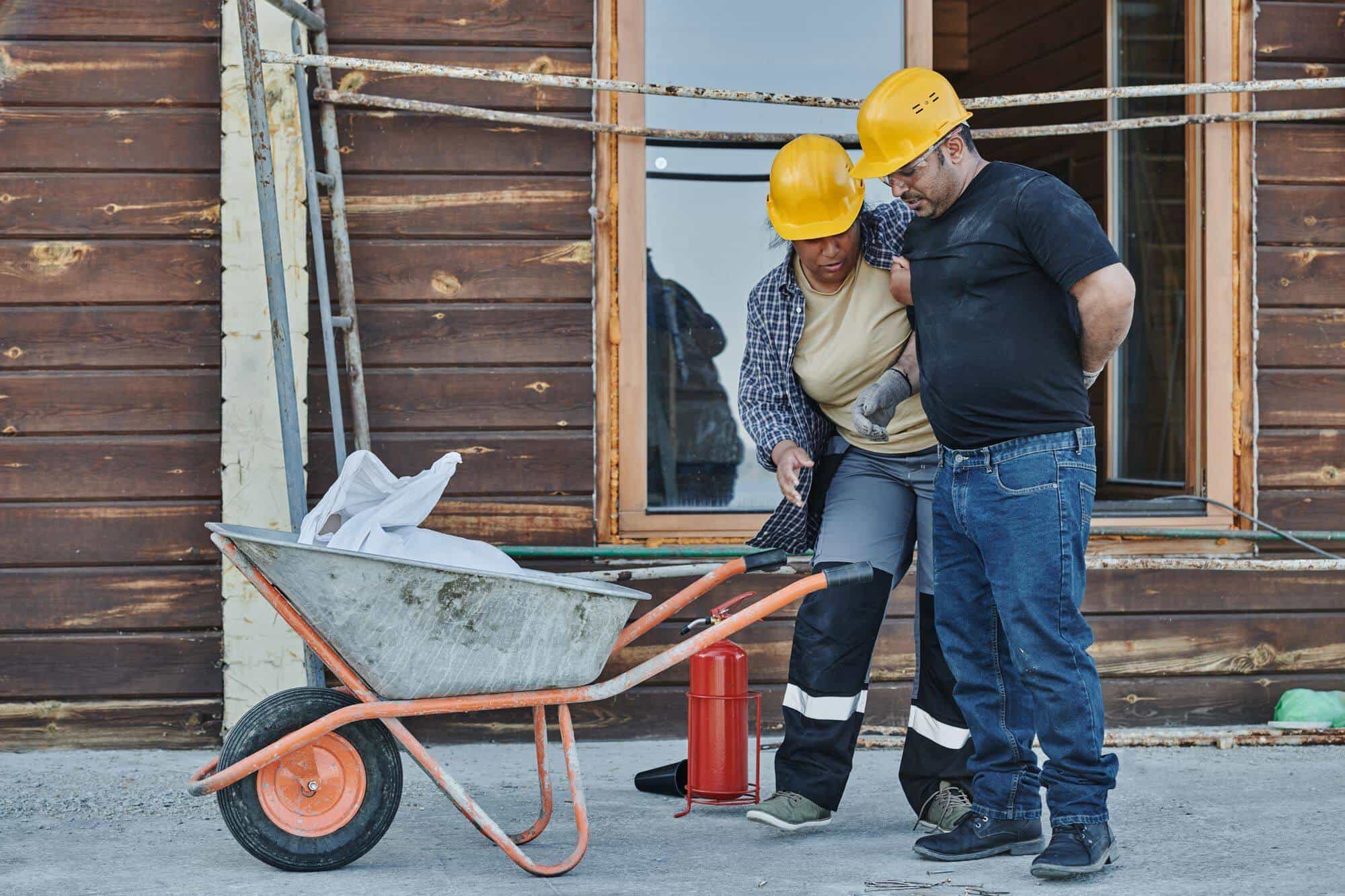
Most questions describe something that happened on site, such as a broken bone, a burn, a week off work or a crane that tipped over, and ask whether it must be reported, by whom and how soon. Our questions are built on the Reporting of Injuries, Diseases and Dangerous Occurrences Regulations 2013, known as RIDDOR, and HSE's guidance on them. A common trap: thinking the injured worker sends the report. HSE says reports should come only from the responsible person, such as the employer. Take the timed quiz below, then read the 10 sample questions further down, each with a worked explanation. Practise RIDDOR before your HS&E test for operatives or Specialist test.
Start the RIDDOR and accident reporting quiz
The timed RIDDOR and accident reporting quiz draws from our full RIDDOR set and explains every answer. The quiz is free: 1 quiz every 7 days without an account, or 30 a day with a free account. A paid plan gives you unlimited quizzes.
Free practice quiz
RIDDOR and Accident Reporting practice quiz (timed)
- questions
- 20
- questions
- minutes
- 30
- minutes
- to pass (90%)
- 18
- to pass (90%)
Ready when you are
Find a quiet 30 minutes. The clock starts when you press start, and you see your score the moment you submit.
- Answers and explanations are shown at the end, with every question to review.
- A fresh set of questions every attempt, drawn from our RIDDOR and Accident Reporting set.
- About 90 seconds a question, against about 54 in the real test, so there is time to think.
- Every answer comes with a worked explanation.
How do CITB RIDDOR questions usually ask it?
RIDDOR questions usually describe an injury, a spell off work or an equipment failure, then ask whether it is reportable, who reports it and by when.
| Question pattern | What it looks like, in our words | What the right answer usually does |
|---|---|---|
| Is it a specified injury? | An injury is described, such as a broken finger, a burn or an eye injury, and you decide if it must be reported | Checks it against the list in regulation 4(1). A fracture diagnosed by a doctor is specified unless it is to a finger, thumb or toe, but amputation of a finger, thumb or toe is specified |
| Days off work | A worker is off for a number of days after an accident, and you choose whether it is reported, recorded or neither | Counts consecutive days, leaving out the day of the accident. More than 7 days is reported within 15 days of the accident, and more than 3 days must be recorded. HSE says weekends and rest days count |
| Dangerous occurrences | Nobody is hurt, but something fails, such as lifting equipment overturning or part of a scaffold collapsing, and you decide if it is reportable | Checks Schedule 2 of RIDDOR. HSE describes dangerous occurrences as certain incidents with a high potential to cause death or serious injury, and the ones that must be reported are listed in that schedule |
Which law and guidance are RIDDOR questions based on?
Our RIDDOR questions are built mainly on the Reporting of Injuries, Diseases and Dangerous Occurrences Regulations 2013, with HSE's RIDDOR guidance for worked examples and HSE's HSG245 for investigating accidents.
| Law or guidance | What the questions take from it |
|---|---|
| Reporting of Injuries, Diseases and Dangerous Occurrences Regulations 2013 (RIDDOR) | Who the responsible person is (regulation 3), specified and over-seven-day injuries (regulation 4), injuries to people not at work (regulation 5), deaths (regulation 6), occupational diseases (regulation 8), records (regulation 12), how and when to report (Schedule 1) and dangerous occurrences (Schedule 2) |
| HSE's RIDDOR guidance on hse.gov.uk | Worked examples of reportable incidents, what counts as a specified injury, the dangerous occurrences in Schedule 2, and who should and should not report |
| HSE HSG245, Investigating accidents and incidents (2004) | Investigating after an accident or near miss, and finding the root causes, which HSG245 says are generally management, planning or organisational failings |
| HSE INDG453, Reporting accidents and incidents at work (revised 2013) | HSE's brief guide to RIDDOR: what must be reported and what records must be kept |
RIDDOR places the reporting duty on employers and people in control of premises, and General Responsibilities Questions covers the wider duties of employers and workers.
RIDDOR sample questions with worked explanations
Here are 10 RIDDOR and accident reporting practice questions, each with the answer and a worked explanation.
Sample question 1 · Accident Reporting (RIDDOR) & First Aid
Under regulation 4(1)(e)(i) of RIDDOR 2013, how much of the body must a burn cover before it is a specified injury?
- More than 5% of the total surface area of the whole body has to burn
- At least one quarter of the total body surface area must be affected
- More than 10% of the whole body's total surface area has to be burnedCorrect answer
- Any burn of whatever size that needs a skin graft in a hospital counts
Why C: Regulation 4(1)(e)(i) sets the threshold at a burn injury, including scalding, which covers more than 10% of the whole body's total surface area. A smaller burn can still be specified under 4(1)(e)(ii) if it significantly damages the eyes, respiratory system or other vital organs.
Sample question 2 · Accident Reporting (RIDDOR) & First Aid
A member of the public is hurt by falling debris from a site and taken to hospital. Under regulation 3(1)(a)(ii), who must report it?
- The injured person's own household insurer, as the interested party
- The local authority environmental health team for that district
- Whoever, by carrying on an undertaking, controlled the premises at the timeCorrect answer
- The nearest employer whose worker happened to see the debris fall
Why C: Regulation 3(1)(a)(ii) makes the responsible person, for an injury to someone not at work, the person who by means of carrying on any undertaking was in control of the premises where the incident happened, at the time it happened. On a construction site that is normally the contractor in control of the works.
Sample question 3 · Accident Reporting (RIDDOR) & First Aid
What work connection does regulation 8(e) require before a diagnosis of occupational asthma has to be reported?
- Significant or regular exposure to a known respiratory sensitizerCorrect answer
- Any exposure to airborne dust created by cutting or by grinding work
- Work in an enclosed space where the air had not been tested beforehand
- Smoking by other workers in a poorly ventilated site welfare facility
Why A: Regulation 8(e) requires that the person's work involves significant or regular exposure to a known respiratory sensitizer. Nuisance dust that is not a recognised sensitizer does not satisfy the paragraph, even though it may still need controlling under other health and safety law.
Sample question 4 · Accident Reporting (RIDDOR) & First Aid
During demolition work, part of a structure collapses. What weight of falling material makes that a dangerous occurrence?
- A fall of more than 1 tonne of material from the structure concerned
- A fall of more than 20 tonnes of material from the structure itself
- Any quantity of material, provided the collapse was unplanned by the firm
- A fall of more than 5 tonnes of material from the structure concernedCorrect answer
Why D: Paragraph 23(a) of Part 2 of Schedule 2 covers the unintentional collapse of any structure involving a fall of more than 5 tonnes of material, arising from or in connection with ongoing construction work including demolition, refurbishment and maintenance. Paragraph 23(b) separately catches any floor or wall of a place of work with no weight test.
Sample question 5 · Accident Reporting (RIDDOR) & First Aid
A bricklayer's wrist injury builds up gradually over months of repetitive lifting. How does RIDDOR classify the cause?
- As an accident, because the harm happened while he was at work
- As a dangerous occurrence, which must be reported within ten days of it
- As a specified injury, because it affects a joint in the arm
- Not as an accident, because gradual cumulative exposure is excludedCorrect answer
Why D: HSE says gradual, cumulative exposures to hazards that eventually cause injury, such as repetitive lifting, are not accidents under RIDDOR.
Sample question 6 · Accident Reporting (RIDDOR) & First Aid
A RIDDOR form has just been submitted online. What does the person reporting receive?
- An emailed copy of the completed form, sent to you within twenty-four hours
- A visit from an HSE inspector within ten days to check the details
- A printed certificate posted out to be displayed in the site office
- A confirmation screen with the RIDDOR reference number and a PDF optionCorrect answer
Why D: HSE says notifiers no longer receive an email copy. After submitting they see a confirmation screen showing the RIDDOR reference number, with a button to download a PDF copy.
Sample question 7 · Accident Reporting (RIDDOR) & First Aid
The full extent of a worker's eye injury is not yet known. Must the employer send a precautionary specified injury report now?
- Yes, and then withdraw it later if the sight is not affected
- No. Eye injuries count once the worker is off for 15 days
- No. Notify the enforcing authority once the specified injury is confirmedCorrect answer
- Yes. Eye injuries must be reported to HSE on the same day they happen
Why C: HSE says there is no requirement to make precautionary reports of specified injuries. The enforcing authority should be notified or updated as soon as one is confirmed.
Sample question 8 · Accident Reporting (RIDDOR) & First Aid
A long-retired former employee is diagnosed with an asbestos-related disease from work done many years ago. Must the old employer report it under RIDDOR?
- Yes, if the employer still holds his old health surveillance records on file
- Yes, if he worked for that employer for more than ten years in total
- No. The condition must be caused or worsened by the person's current workCorrect answer
- Yes. Asbestos diseases must be reported by the person's last employer
Why C: HSE's example says this is not reportable, because the condition was not caused or made worse by the person's current work.
Sample question 9 · Accident Reporting (RIDDOR) & First Aid
The timber formwork holding wet concrete for a new wall collapses during the pour. Nobody is hurt. Is it reportable?
- Only if the wall was more than 5 metres high when it fell
- Yes. HSE says all failures of falsework are reportableCorrect answer
- No. Nobody was injured, so there is nothing to report
- No. Only collapses of more than 5 tonnes are reportable
Why B: HSE's example says yes: all failures of falsework are reportable as dangerous occurrences, whether or not anyone is hurt.
Sample question 10 · Accident Reporting (RIDDOR) & First Aid
A worker's hand is cut by a saw blade. In HSG245's classification of the causes of adverse events, which of these is the immediate cause?
- The saw blade itself, as the agent of injury that cut the handCorrect answer
- Supervisors not carrying out pre-start-up checks on the machine
- A failure to identify training needs and to assess competence
- Low priority being given to risk assessment within the firm
Why A: HSG245 classifies the immediate cause as the agent of injury or ill health, such as the blade. Missed pre-start-up checks are an underlying cause, and failing to assess competence or prioritise risk assessment are root causes.
Which RIDDOR answers catch people out?
The traps are answers that guess at the rules: treating every injury to a finger the same, letting the injured worker report, and using one deadline for every report.
Specified injuries are a fixed list, and the wording matters. Regulation 4(1) of RIDDOR leaves out fractures to fingers, thumbs and toes, but it includes amputation of a finger, thumb or toe. An eye injury is specified when a doctor diagnoses it as likely to cause permanent blinding or reduction in sight in one or both eyes.
The responsible person sends the report. Regulation 3 makes an employee's employer the responsible person. For a self-employed person or a member of the public, it is whoever was in control of the premises at the time. HSE says an injured person should not use the reporting system unless they are self-employed.
The reporting deadlines differ. An over-seven-day injury must be reported within 15 days of the accident. A death, a specified injury, an injury to a member of the public taken to hospital, or a dangerous occurrence must be notified by the quickest practicable means without delay, with a report sent within 10 days.
Where does RIDDOR sit in the CITB test?
RIDDOR and accident reporting is part of the core knowledge you practise for the CITB Operatives test. The Specialist tests include the core questions too, so the same knowledge counts there.
RIDDOR FAQs
What is a specified injury under RIDDOR?
One of the serious injuries listed in regulation 4(1) of RIDDOR 2013, such as a fracture diagnosed by a doctor (other than to a finger, thumb or toe), an amputation, an injury likely to cause permanent loss of sight, or loss of consciousness caused by a head injury or asphyxia.
Are these the real CITB test questions?
No. These are practice questions written for this site, each tied to the law or HSE guidance it tests; CITB does not publish its test questions.